Case study
Tepper-Efka is reorganising its dropshipping process
“From 12 to 100 orders per round!”
Tepper-Efka, based in Groningen, is an international wholesaler of car accessories. With an extensive portfolio, Tepper-Efka serves a large proportion of the international B2B automotive market. Tepper-Efka is selling an increasing number of products via dropshipping. This is a form of e-commerce whereby retailers offer products in their online shop that they do not hold in stock themselves. When a customer orders a product from the online shop, Tepper-Efka dispatches the product directly to the customer. The dropshipping process, in particular, called for a more efficient approach to logistics. To this end, Tepper-Efka is collaborating with WMS specialist Arox Logistics IT from Hoogezand. Diedrich Streuper, logistics manager, and Bert van Wijk, functional administrator at Tepper-Efka, explain to us what this means in practice.
Small numbers
“Dropshipping often involves small quantities,” says Diedrich Streuper. “Customers often order just one product. This means that our logistics staff have to move around the warehouse as efficiently as possible: we call this ‘order picking’. We decided to investigate how we could make this process more efficient. Through the company Green Logistics, we came into contact with Arno Bruining, owner of Arox.”
New scanners
“Arox worked with us and walked through the warehouse with us,” says Diedrich. “We showed them how we were working at the time and why we did things that way.” Bert adds: “Arox has set up a warehouse management system for us that makes the dropshipping process more efficient.”
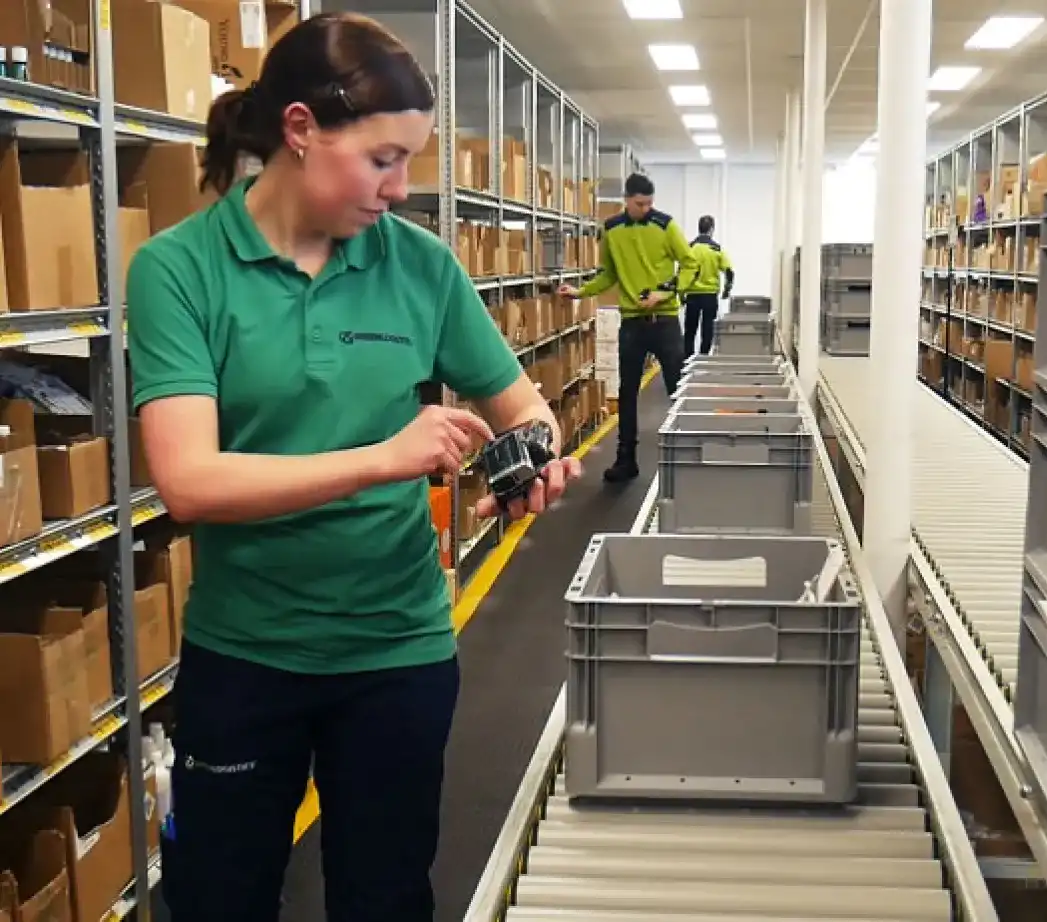
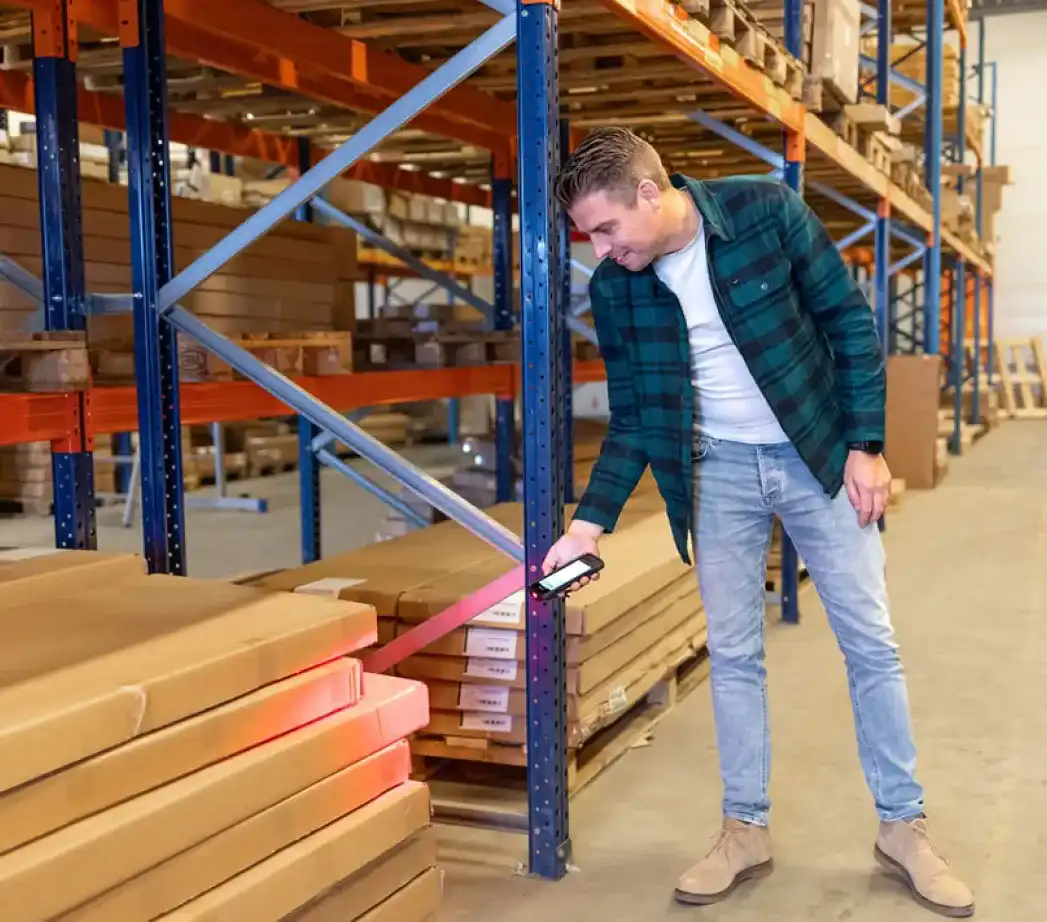
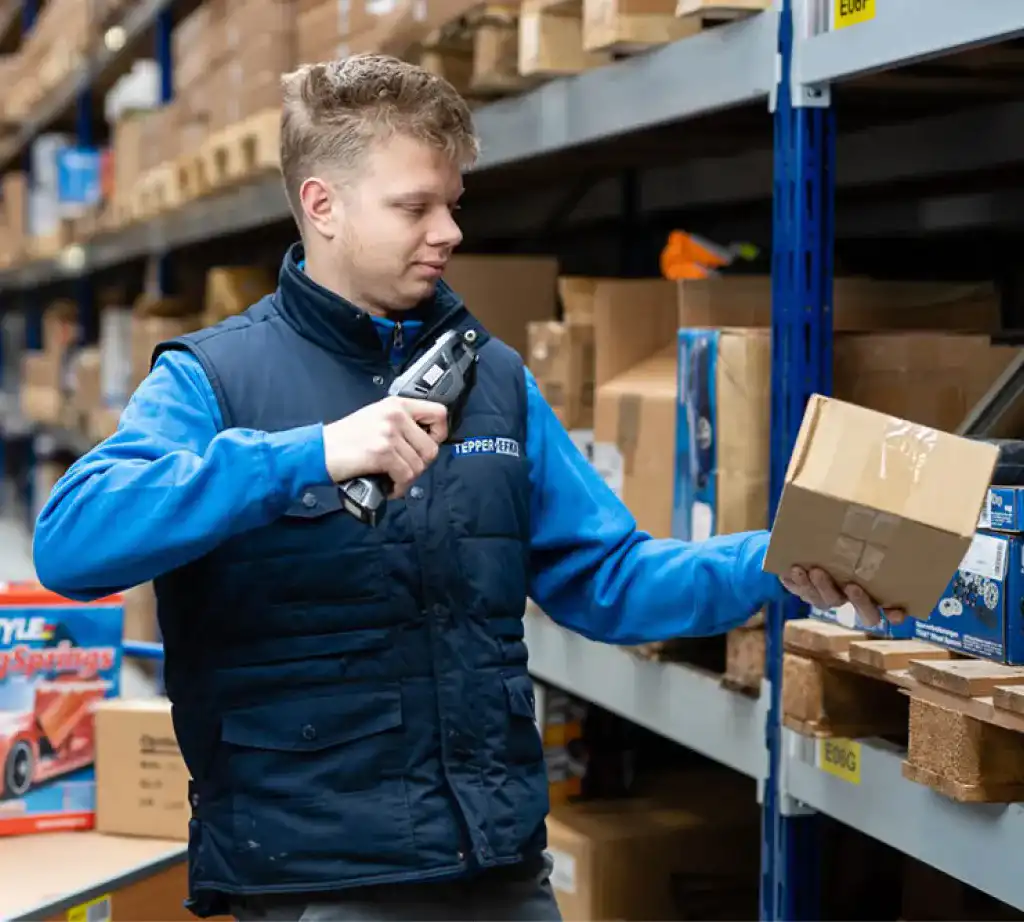
In collaboration with Arox, Tepper-Efka first set everything up properly at the front end. The length, width, height and weight of each product were entered. This involves over 50,000 products. The Arox system is designed so that, once scanned, the products always fit into the bins and onto the trolleys in the warehouse. Arox has also programmed new scanners.
“We have set up various types of order trolleys, including different order-picking bins of various sizes, so that a product will always fit into an order-picking bin,” explains Diedrich. “Of course, it took the logistics staff a while to get used to the scanners when they were first introduced. But they soon got the hang of it. Initially, we could pick a maximum of 12 orders during a single round in the warehouse. Since we’ve been using the new scanners, we can pick as many as 100 orders in a single round. This saves a great deal of time, which has reduced order costs. It’s a significant step forward for logistics within our company.”
Tablets at packing tables
Following the introduction of the scanners, the packing stations in the warehouse have also been reorganised. The PCs with keyboards and mice have been replaced by suspended tablets. At the packing stations, each product is packed and provided with a label and a packing slip. “Our logistics staff used to have to enter on the PC which type of packing slip and label needed to be printed,” explains Bert. “This involved quite a few steps. The new system enters a number of details automatically, meaning the logistics staff only need to scan the product and follow a few fixed steps on the tablet. We’ve also set everything up to our carriers’ specifications, ensuring the whole process runs smoothly.”
Walking takes time
Bert and Diedrich are pleased with the results, which are already noticeable. “It takes a bit of getting used to changing a working method,” says Diedrich. “But the staff are now a natural at it. The speed, efficiency and ease of order picking have improved enormously. The WMS is an investment that has quickly paid for itself.” Bert agrees. “Both our staff and our customers are experiencing the benefits.”